Designing for Credit Card Dimensions (So Your Card Doesn’t Come Back From the Print Shop “Almost Right”)

If you’re designing a credit card, you’re not making a poster that can be trimmed a little loose and forgiven.

You’re making a thing that has to survive wallets, readers, ATMs, lamination, and a production line that doesn’t care about your perfectly aligned logo.


 The non-negotiable size: ID1, and everything that cascades from it

The standard credit card format is ISO/IEC 7810 ID‑1: 85.60 × 53.98 mm, with 3.18 mm corner radii. That’s the geometry. Treat it like law, not a suggestion.

Why it matters is less philosophical and more mechanical:

– Wallet slots are built around it.

– Chip readers assume the edge and chip land in predictable places.

– Lamination and trimming equipment is set up for repeatable cuts at scale.

– Even a “tiny” mismatch at corners can catch, peel, or look cheap.

A surprisingly high number of “design issues” are actually tolerance issues pretending to be design issues.

If you’ve ever found yourself wondering what are credit card dimensions, you can cross-check the same values echoed in EMV/issuer production guides and card manufacturer spec sheets.

Source: ISO/IEC 7810 specifies ID‑1 dimensions (85.60 × 53.98 mm).


 Hot take: bleed is not optional on a credit card. It’s the whole game.

I’ve seen gorgeous layouts die because someone treated a card like a business card and used a cute, minimal bleed. Cards get trimmed, they get laminated, they shift. The press doesn’t line up perfectly every time, and the cutter doesn’t worship your artboard.

Typical working numbers (confirm with your vendor, but this is the practical baseline I’ve used):

Bleed: extend 3 mm past the final cut

Safe margin: keep critical content at least 1 mm inside the trim (I often push this wider for small text)

Quiet zones: leave extra breathing room near areas that will be embossed, foiled, or overlaid

Here’s the thing: on cards, the edge finish and laminate can visually “eat” detail. A hairline border that looks crisp on screen can turn into an uneven frame once it’s trimmed and rounded.

One-line reality check:

Border designs are where confidence goes to die.


 Corners: a tiny radius that causes big headaches

The 3.18 mm corner radius sounds like trivia until you print a batch and realize one corner is a little “sharper” and suddenly the whole card feels off in-hand.

Corner work is where you stop eyeballing and start verifying.

Technical habits that actually save you:

– Use a corner template or manufacturer dieline, not a hand-drawn rounded rectangle.

– Check radii on physical samples (not just in Illustrator).

– Measure where the curve meets the edge. That’s where mismatch shows up first.

Now, this won’t apply to everyone, but if your design has a frame, a border, or any edge-hugging pattern… increase your internal padding. You’re not being cautious. You’re being realistic.


 Chip placement: treat it like an engineering constraint, because it is

Chip placement isn’t a “design element.” It’s a functional module with standards behind it, and it lives inside a pretty strict footprint.

In production terms, you’re aligning:

– the chip module location relative to the card edges (datum references matter)

– the surrounding print so you don’t create ugly tangents or crowding

– other features like magnetic stripe zones, holograms, and potential emboss areas

I’m opinionated here: design around the chip early. Don’t finish a gorgeous front face and then “drop the chip in.” That’s how you end up shrinking logos, wrecking hierarchy, or (worse) placing fine detail right where lamination and milling will stress the surface.

Also, document where your chip clearance lives. Your printer will love you for that, and you’ll get fewer panicked emails.


 Bleed vs. safe area vs. “stuff that must survive finishing”

People lump these together. They’re different.

Bleed is extra art that gets chopped off.

Safe area is where essential elements live so trimming doesn’t clip them.

Finishing-safe zones are areas protected from embossing pressure, signature panels, UV coats, foils, and overlays.

And finishing is where good files go to get weird.

Embossing, for example, can distort nearby print ever so slightly. Foil can shift. A laminate seam can change how blacks look at the edge. If you’ve never watched a card go through the full stack of processes, it’s easy to assume the PDF is the final truth. It isn’t.

Look, I love clean typography. But 6pt microtext near an edge on a laminated substrate? That’s gambling.


 Color: the “pretty on screen” trap (and why CMYK discipline wins)

Cards are printed on plastics and composites. Ink behaves differently. Coatings change perception. A rich black on one stock can turn muddy on another. That’s normal.

Start from the boring, reliable place:

– Work in a CMYK workflow aligned to the printer’s process.

– Use an ICC profile provided by the manufacturer when possible.

– Expect that gloss vs. matte will change saturation and contrast (it will).

In my experience, the biggest color failures come from two decisions:

1) designing in RGB and “converting later,” and

2) using huge dark coverage without checking ink limits for that substrate.

One data point to keep you honest: ISO/IEC 7810 defines card size, but color consistency is usually governed by the printer’s process controls, and many vendors cap total ink coverage depending on press and material. Ask them for the limit. Don’t guess.


 Materials: PVC, PET, composites… and the part designers forget

You’ll hear PVC constantly because it’s common and cost-effective. PET and composite constructions show up when you’re chasing durability, stiffness, or specific environmental requirements.

But the thing designers forget is simple:

Material affects tolerances.

A substrate that behaves differently under heat and lamination will shift differently. That impacts registration. That impacts edge appearance. That impacts whether your tight layout still looks tight after it’s built like a sandwich.

If your layout is aggressive (full-bleed photo, thin borders, lots of edge detail), ask your supplier what constructions they recommend. It’s not “their problem.” It’s a shared constraint.


 Translating “design specs” into production tolerances (the part that feels unsexy until it saves you)

Designers love absolutes. Production lives in ranges.

You don’t just specify “85.60 × 53.98 mm.” You specify what variation is acceptable, how it’s measured, and what happens if it drifts.

A more production-literate way to think:

– Nominal dimension + allowed variance

– Measurement method (calipers? template? optical inspection?)

– Sampling plan (how many cards per batch get checked?)

Also: align tolerances with real risk. A 0.2 mm shift in a background gradient? Annoying. A 0.2 mm shift that crowds a chip or clips microtext? That’s a reprint.


 Layout mistakes I keep seeing (and yes, I’m judging a little)

Some are aesthetic. Most are preventable.

Edge-hugging logos that look “premium” on screen and stressed in real life

Too many type styles fighting on a small canvas

Low-contrast numbers because the background “needed to be exciting”

Ignoring optical alignment (centered isn’t always centered, especially with logos)

Not testing at true size (zooming in at 400% is not a proof)

If you’re only going to do one thing: print a 1:1 mockup on paper, cut it out, and look at it from arm’s length. You’ll catch hierarchy problems instantly.


 File prep: the checklist that prevents “We can’t use this file”

Some sections of this process deserve a neat list. This is one of them.

Press-ready habits that reduce drama:

– Export at the correct final size with bleed included in the document setup

– Use the correct color space and embed/assign the vendor ICC profile

– Outline fonts or embed them (depending on vendor preference)

– Keep layers named sanely (Front, Back, Spot UV, Foil, Signature Panel, etc.)

– Provide a proof PDF showing trim, bleed, and safe zones clearly

– Include a notes file: materials, finish, spot colors, any special handling

And don’t forget the weird-but-real stuff: versioning. A changelog. A final “approved” stamp somewhere in your filenames. Production teams live on clarity.


 Adapting an existing card design to spec: where “close enough” gets expensive

Adapting an existing design is never just resizing. You’re reconciling:

– old bleed assumptions

– different corner radii

– a chip moving a millimeter that suddenly collides with a logo

– a new laminate that makes the brand color look wrong

– added security printing that needs space you don’t have

The smart move is to treat adaptation like a mini prototyping cycle: update dielines, output test coupons, check fit in readers/wallets, then lock the final.

If you do it right, no one notices. That’s the goal. The card just feels… inevitable.

If you want, tell me the printer/vendor you’re using (or the process: digital, offset, retransfer) and whether the card includes chip + magstripe + signature panel. I can translate the generic bleed/safe-zone guidance above into a tighter, vendor-style spec sheet.


Modern Salon Stations Bringing Organization to Creative Styling Spaces

Modern salon stations play a major role in creating organized and inspiring beauty environments. Thoughtfully designed workstations help beauty professionals maintain efficiency while supporting creativity and comfort. Stylish and functional salon stations contribute to a professional atmosphere where both clients and stylists enjoy a smooth and relaxing experience.

Creating Organized Styling Environments

Well-designed Salon Stations help keep beauty tools and products arranged neatly, allowing stylists to work efficiently throughout busy appointments. Organized spaces also create a more welcoming and visually appealing environment for clients.

Benefits of organized salon stations include:

  • Improved workspace cleanliness and order
    • Faster access to styling tools and supplies
    • Reduced clutter in busy beauty spaces
    • Enhanced professional appearance
    • Smoother daily salon operations

A clean and structured workspace helps create a calm and productive salon atmosphere.

Enhancing Creative Styling Workflows

Salon Stations

Creative beauty services require workstations that support flexibility and efficiency. Modern salon stations provide functional layouts that help stylists move comfortably between different tasks.

Features that improve creative workflows include:

  • Spacious countertops for styling essentials
    • Smart storage compartments for easy organization
    • Convenient tool placement for faster access
    • Functional layouts that support smooth movement
    • Comfortable workstation setups for long appointments

Efficient workstations allow beauty professionals to focus fully on creativity and precision.

Elevating the Salon Interior Design

Modern salon stations contribute greatly to the visual appeal of beauty spaces. Elegant workstation designs help create sophisticated interiors that feel polished and inviting.

Stylish design benefits include:

  • Enhancing the overall salon atmosphere
    • Supporting modern and elegant interiors
    • Creating a balanced and organized appearance
    • Adding sophistication to beauty workspaces
    • Improving the visual flow of salon layouts

Beautifully designed stations help salons feel more luxurious and professional.

Supporting Client Comfort and Relaxation

Organized styling stations help create smooth and stress-free client experiences. Clean and efficient workspaces contribute to a relaxing environment where clients feel comfortable and valued.

Ways salon stations support client satisfaction include:

  • Creating tidy and welcoming styling areas
    • Reducing distractions during appointments
    • Supporting efficient beauty services
    • Encouraging calm and relaxing experiences
    • Promoting a professional salon atmosphere

Clients often appreciate spaces that feel organized, peaceful, and thoughtfully designed.

Improving Daily Salon Efficiency

Modern salon stations help beauty professionals manage busy schedules more effectively. Functional storage and efficient layouts support smooth daily operations in fast-paced environments.

Efficiency-focused advantages include:

  • Better organization of beauty supplies
    • Faster preparation between appointments
    • Easier maintenance of clean workspaces
    • Improved workflow during multiple services
    • Enhanced productivity throughout the day

Efficient salon stations contribute to a more enjoyable working environment for beauty professionals.

Building Functional and Stylish Beauty Spaces

Modern salons benefit from workstations that combine functionality with visual elegance. Stylish salon stations support creative styling while maintaining a professional and organized atmosphere.

Important qualities of modern salon stations include:

  • Durable construction for long-term use
    • Elegant finishes that complement salon décor
    • Smart storage solutions for organization
    • Spacious layouts for creative flexibility
    • Professional presentation that enhances salon appeal

Modern salon stations help transform creative styling spaces into organized, elegant, and highly functional environments where beauty professionals can work efficiently while delivering exceptional client experiences.

Advanced E-Shop Solutions Tailored For High-Performance Digital Environments

Modern digital commerce is rapidly evolving, demanding intelligent, scalable, and high-performance e-shop solutions that can adapt to dynamic user expectations. Advanced e-shop systems are designed to deliver seamless experiences, optimize operational efficiency, and empower businesses to thrive in competitive digital environments.

Optimized Architecture for Speed and Stability

High-performance e-shop platforms are built with robust architectures that ensure fast loading speeds and uninterrupted functionality.

  • Scalable infrastructure that handles traffic spikes effortlessly
  • Cloud-ready deployment for enhanced flexibility
  • Lightweight frameworks for faster response times
  • Advanced caching mechanisms to reduce server load
  • Content delivery optimization for global reach
  • Real-time performance monitoring for continuous improvement

Seamless User Experience and Interface Design

User-centric design plays a vital role in driving engagement and conversions in digital commerce. Many entrepreneurs choose κατασκευή e-shop for creating efficient and attractive online stores that support business growth worldwide.

  • Intuitive navigation for effortless browsing
  • Mobile-first design for cross-device compatibility
  • Streamlined checkout processes to reduce cart abandonment
  • Personalized product recommendations for better engagement
  • Interactive interfaces that enhance user satisfaction
  • Accessibility features to cater to diverse audiences

Advanced Security and Data Protection

Security remains a top priority in high-performance e-shop environments, ensuring trust and reliability.

  • End-to-end encryption for secure transactions
  • Multi-layer authentication systems for user safety
  • Automated fraud detection and prevention tools
  • Secure payment gateway integrations
  • Continuous vulnerability assessments and updates
  • Compliance with global data protection standards

Intelligent Automation and AI Integration

Automation and intelligent technologies elevate e-shop performance by improving efficiency and personalization.

  • AI-driven analytics for customer behavior insights
  • Automated inventory management systems
  • Smart chat assistants for instant customer support
  • Predictive algorithms for demand forecasting
  • Dynamic pricing strategies based on market trends
  • Workflow automation to streamline backend operations

Scalable Product and Inventory Management

Efficient product handling ensures smooth operations and accurate stock control.

  • Centralized inventory tracking across multiple channels
  • Bulk product upload and management tools
  • Real-time stock updates to prevent overselling
  • Flexible categorization for better organization
  • Integration with supply chain systems
  • Automated alerts for low stock and replenishment

Enhanced Marketing and Conversion Tools

Advanced e-shop solutions incorporate powerful marketing capabilities to drive growth.

  • Integrated SEO tools for improved visibility
  • Email marketing automation for customer retention
  • Discount and promotion management systems
  • Social media integration for broader reach
  • Customer segmentation for targeted campaigns
  • Analytics dashboards for performance tracking

Future-Ready Integration Capabilities

Adaptability is key in high-performance environments, and modern e-shop platforms are built for seamless integration.

  • API-driven architecture for easy customization
  • Compatibility with third-party tools and services
  • Omnichannel support for unified commerce experiences
  • Integration with logistics and delivery systems
  • Flexible payment options for global audiences
  • Modular design for continuous upgrades

Conclusion

Advanced e-shop solutions are transforming digital commerce by combining speed, security, intelligence, and scalability. With a strong focus on performance-driven design and user satisfaction, these systems empower businesses to deliver exceptional online shopping experiences. By embracing innovative technologies and flexible architectures, organizations can build resilient, future-ready e-commerce ecosystems that consistently perform at the highest level.

Professional Help for Confident MCA Dispute Management

Managing MCA-related financial disputes requires clarity, structure, and informed-decision-making. Businesses often face challenges when repayment terms, cash flow pressure, or contract interpretations become difficult to navigate. Professional assistance can help create a balanced approach that supports communication, documentation review, and negotiation planning. With the right support, businesses can move toward fair resolutions while maintaining stability and operational confidence. The focus remains on creating practical solutions that reduce stress and encourage constructive outcomes for all parties involved.

Understanding MCA Disputes

Key Advantages of Structured Dispute Support

Professional guidance in MCA dispute management brings structure, clarity, and confidence to complex financial situations. It allows businesses to understand obligations better, assess available options, and develop fair communication strategies. Expert support encourages transparency and helps reduce misunderstandings during negotiation processes. With a calm and organized approach, businesses can protect their interests while working toward practical outcomes that benefit long-term stability.

Practical Steps Toward Effective Resolution

Adopting a guided approach helps streamline discussions and improves decision-making in MCA disputes.

  • Reviewing financial commitments with a clear perspective ensures better understanding and reduces confusion.
  • Maintaining open communication supports smoother negotiation and builds mutual agreement opportunities.
  • Seeking structured guidance encourages balanced decisions and long-term financial clarity.

A well-supported dispute management process empowers businesses to move forward with confidence and renewed financial direction.

Building Confidence Through Professional Support

Accessing professional assistance strengthens decision-making and promotes balanced outcomes in MCA-related disputes. It helps businesses stay focused on long-term goals while addressing immediate financial concerns with clarity. Structured guidance fosters resilience, ensuring that challenges are handled with composure and practical thinking. For those seeking a reliable path toward improved resolution strategies, visit CredibleLaw can represent a step toward informed and confident dispute management.

Strengthening Communication and Financial Clarity

Effective MCA dispute management relies on clear communication and well-structured financial understanding. When businesses engage in organized discussions, they gain better insight into repayment expectations and available adjustment possibilities. Professional support encourages respectful dialogue, helping both sides maintain focus on practical solutions rather than conflict. This approach strengthens trust and improves the likelihood of reaching balanced agreements that support ongoing business operations. It also reduces uncertainty by ensuring that all financial details are reviewed carefully and interpreted accurately. With improved clarity, businesses can prioritize stability and make informed decisions that support future growth. A guided framework also encourages consistency in communication, which helps avoid misunderstandings and supports smoother resolution pathways. Over time, this structured approach builds confidence, allowing businesses to navigate financial challenges with greater ease and assurance.

Moving Toward Positive Financial Resolution

With structured guidance and a calm approach, businesses can transform complex MCA disputes into manageable discussions that lead to fair outcomes. Professional support encourages steady progress, helping organizations maintain clarity, reduce stress, and focus on sustainable financial improvement while continuing their core operations with renewed confidence and direction.

How a Vehicle Bumper Helps Improve Safety on the Road

A vehicle bumper plays a vital role in improving road safety by acting as the first protective barrier during collisions. It is designed to absorb and distribute impact forces, reducing the severity of damage to both the vehicle and its occupants. Beyond protecting the structure of the vehicle, it also contributes to safer interactions with pedestrians and other road users. With thoughtful engineering, bumpers enhance overall driving confidence and help minimize injury risks in a wide range of everyday traffic situations.

Energy Absorption and Impact Protection

One of the primary functions of a vehicle bumper is energy absorption during impact. Modern designs are engineered to manage collision forces by reducing the shock transferred to the main body of the vehicle. This helps protect critical components and improves overall passenger safety during sudden stops or minor crashes. The controlled deformation of bumper structures ensures that energy is dissipated efficiently, contributing to a safer and more stable driving experience in unpredictable road conditions. The selection on https://sunwayautoparts.com/product-category/bumper/ is designed to support strong and efficient vehicle performance.

  • Absorbs kinetic energy during collisions
  • Reduces force transmitted to passengers
  • Helps maintain vehicle structural integrity
  • Minimizes damage to critical front and rear components
  • Enhances safety in low-speed impacts

Pedestrian and Vehicle Safety Benefits

Vehicle bumpers also improve pedestrian safety and interaction in traffic environments. Their design helps reduce injury severity by providing a softer contact surface compared to rigid vehicle structures. They also contribute to safer maneuvering in crowded areas and parking conditions.

  • Reduces injury severity during minor pedestrian contact
  • Provides smoother impact zones on vehicle exterior
  • Supports safer navigation in tight spaces
  • Improves awareness of surrounding environment during driving

Structural Support and Low-Speed Protection

Bumpers provide essential structural support by reinforcing the vehicle’s outer framework. They are especially effective in low-speed collisions, where they help prevent damage to more expensive internal components. This protective layer ensures that minor accidents do not lead to major repairs, making everyday driving more secure and manageable. Their design also helps maintain alignment and stability after minor impacts, supporting consistent vehicle performance.

Key Safety Features in Modern Bumpers

Modern bumper systems integrate multiple safety-oriented features that work together to enhance protection and performance. These elements are carefully designed to improve impact response and ensure better safety outcomes across different driving conditions.

  • Shock-absorbing structures for controlled deformation
  • Reinforced support beams for added strength
  • Energy dispersion layers to reduce impact force
  • Aerodynamic shaping for improved stability
  • Integrated sensors for enhanced awareness systems

Vehicle bumpers play an essential role in enhancing road safety by combining impact absorption, structural reinforcement, and advanced protective features. They help reduce damage during collisions, improve pedestrian safety, and support overall vehicle stability. By managing energy effectively and strengthening key areas of the vehicle, bumpers contribute to a safer driving experience in both city and highway conditions. Their thoughtful design ensures that everyday travel remains more secure, controlled, and reliable for all road users, reinforcing confidence behind the wheel in diverse situations.

Secure and Powerful Features for Better Play Sessions

In modern interactive environments, players look for smooth, reliable, and rewarding systems that elevate every moment of engagement. With advanced design approaches and intelligent optimization, gameplay experiences now feel more dynamic, responsive, and enjoyable than ever. The integration of XP-based progression systems helps users stay motivated as they achieve milestones and unlock meaningful rewards. Combined with secure frameworks and powerful performance enhancements, these environments ensure consistent stability, fairness, and long-term satisfaction for every session. Players benefit from seamless control and optimized engagement flow.

Enhanced Stability and Performance Layers

  • Secure architecture ensures smooth gameplay continuity
  • Optimized servers reduce delays and improve responsiveness
  • Adaptive systems maintain balanced and fair sessions
  • Real-time monitoring enhances stability and user confidence

Progression Systems and Reward Flow

HELLDIVERS 2

  • Smooth progression tracking boosts engagement and motivation
  • XP-driven milestones create a rewarding sense of achievement
  • Personalized dashboards highlight user growth clearly
  • Continuous feedback loops enhance strategic improvements

Precision Control and Advanced Assistance Tools

In advanced gaming environments, precision and control play a vital role in delivering consistent performance and enjoyable experiences. Intelligent assistance systems are designed to support users by improving accuracy, timing, and decision-making without compromising fairness or balance. Midway through these enhancements, Aimbot features are often referenced as precision-focused aiming support tools that highlight how technology can assist in improving targeting consistency in controlled environments. Alongside these systems, adaptive input recognition and smart sensitivity adjustments ensure smoother handling and refined control. These innovations work together to create a more immersive and responsive experience where every action feels natural, accurate, and well-timed across different play styles.

  • Enhanced aiming support improves consistency in performance
  • Smart control systems refine movement accuracy and timing
  • Adaptive assistance tools maintain smooth and balanced gameplay
  • Real-time feedback helps users adjust strategies effectively

Secure Environment and Long-Term Benefits

In addition to performance and precision, Hacks secure environments ensure that every play session remains protected, stable, and enjoyable. Advanced systems are designed to maintain data integrity, reduce disruptions, and provide a reliable foundation for continuous engagement. Users experience improved confidence as they interact within well-structured frameworks that prioritize safety, fairness, and long-term consistency across all activities.

  • Strong security layers protect user data and gameplay progress
  • Stable systems ensure uninterrupted and smooth play sessions
  • Fair-play mechanisms maintain balanced and transparent environments
  • Continuous optimization supports long-term performance improvement

Overall, these interconnected systems create a unified and rewarding environment where players can enjoy smoother interactions, improved responsiveness, and meaningful progression. Every feature is designed to enhance engagement while maintaining stability and fairness throughout each session. With a strong focus on optimization and user experience, the platform ensures that both new and experienced users benefit from consistent improvements. The combination of secure infrastructure, intelligent assistance, and adaptive design leads to a highly enjoyable and long-lasting play environment that supports growth, precision, and satisfaction in every interaction.

Not All Digital Marketing Services Are Built for Your Industry — and Pretending Otherwise Gets Expensive

Generic digital marketing is like buying “one size fits all” safety gear. It technically covers you. It also chafes, slips, and fails right when you need it.

If you’ve ever looked at a campaign report full of clicks and thought, “Cool… but why isn’t pipeline moving?”—that’s usually the mismatch talking.


 Hot take: “Best practices” are usually just someone else’s practices.

Look, I’m not saying broad playbooks are useless. They’re fine as scaffolding. But the second you operate in a regulated space, a long-cycle B2B category, a high-trust healthcare niche, or any market where procurement is its own mini-universe, generic tactics stop being “efficient” and start being quietly destructive. This resource helps illustrate why context matters so much.

Because your industry has texture:

– compliance boundaries that shape what you can claim

– jargon that signals credibility (and jargon that screams outsider)

– buying committees instead of “the customer”

– seasons, cycles, budget freezes, approvals, and gatekeepers

A generalized agency or platform can absolutely run ads. That’s not the bar. The bar is whether they can generate qualified movement inside the reality you actually sell in.


 Industry alignment isn’t a branding preference. It’s a performance requirement.

Here’s the technical version.

Industry-aligned marketing is the discipline of mapping message, channel, offer, and measurement to actual buying behavior in your vertical—not platform defaults and not what worked in some unrelated category.

When you get it right, a few things happen fast:

  1. Your messaging becomes specific enough to be believed.
  2. Your channel mix stops chasing attention and starts intercepting intent.
  3. Your KPIs stop rewarding noise.

And when you get it wrong? You don’t just lose spend. You degrade trust. That’s the compounding cost people forget.

One-line emphasis, because it matters:

Your buyers can smell generic from a mile away.


 The trap: segmentation and personas done “on paper”

Most teams say they segment. Then they produce a slide with three boxes and call it strategy.

Real segmentation is behavioral and economic. It’s not “SMBs vs enterprise.” It’s closer to:

– “Operations leaders trying to reduce failure rate under audit pressure”

– “Procurement-led renewals with vendor consolidation mandates”

– “Founder-led buyers moving fast but needing social proof to justify risk”

Personas, same deal. If your persona doesn’t include constraints (legal review times, stakeholder objections, data requirements, implementation friction), you’ve built a character, not a buying model.

Now, this won’t apply to everyone, but if you’re in a complex B2B category, your persona should basically read like an internal memo: who blocks, who champions, what triggers a shortlist, what kills a deal.


 Why generic playbooks miss (and sometimes offend) your audience

Here’s the thing: generic marketing tends to optimize for platform behavior rather than buyer behavior.

So you get:

– aggressive CTAs when the market requires risk reduction

– simplified messaging when buyers need technical proof

– content volumes that look productive but don’t change decisions

– lead forms collecting “MQLs” that sales can’t use

I’ve seen this pattern repeatedly: the more generic the message, the more the campaign has to rely on discounts, urgency, or empty “thought leadership” to compensate. That might work in impulse categories. In trust-heavy industries, it reads like desperation.

And yes—branding takes a hit. Not because your logo looks bad, but because inconsistency shows up at the worst moments: the first landing page, the first sales call, the first compliance question. Buyers connect those dots.


 A quick diagnostic: does your marketing fit your market?

Not a fluffy audit. A real one.


 1) Follow engagement by stage, not by channel

If you don’t know where interest drops, you’ll keep “optimizing” the wrong lever. Break performance into:

– awareness → qualified attention

– qualified attention → consideration (repeat visits, demo views, pricing interactions)

– consideration → conversion

– conversion → retention / expansion

Vanity metrics can still exist, but they don’t get to drive decisions.


 2) Check for brand promise drift

Open five touchpoints—ad, landing page, nurture email, sales deck, webinar. Do they tell the same story, or do they feel like five different companies sharing a CRM?


 3) Personalization: do you tailor meaningfully or just merge fields?

“Hi {FirstName}” is not personalization. Segment-specific offers, timing, and objections handling is.


 4) Governance reality check

If teams disagree on ICP, definitions of “qualified,” or who owns which channel, you’re not running a marketing system. You’re running a set of independent projects.


 Channels aren’t “what performs.” They’re what your buyers tolerate.

I’ll get slightly opinionated here: channel strategy is where most marketing advice becomes useless.

Because “LinkedIn works for B2B” is not a strategy. And “TikTok is hot right now” isn’t either.

Channel optimization is matching:

where buyers research

how they validate claims

what formats they trust

when they’re allowed to make decisions (procurement cycles matter)

If you sell into healthcare, finance, legal, or anything compliance-heavy, the channel isn’t just about reach. It’s about risk. Buyers choose the safest path to being right.

So your job is to make choosing you feel professionally defensible.


 A data point that should scare you a little

Google’s economic impact report noted that businesses make an average of $2 in revenue for every $1 spent on Google Ads (Google Economic Impact Report, 2023: https://economicimpact.google/).

That’s the headline everyone repeats.

What they skip: that average assumes competent targeting, conversion paths that don’t leak, and offers aligned with intent. In an industry mismatch scenario, you can spend the same dollar and get half the revenue—or none—because the buyer doesn’t interpret your message the way the platform’s targeting model expects.

Same tool. Different outcome. Industry context is the multiplier.


 Case studies: what “industry-aligned” changes in practice

Generic campaigns tend to look like this:

– broad messaging (“save time,” “increase ROI”)

– wide targeting

– conversion event = form fill

– success metric = cost per lead

Industry-aligned campaigns behave differently. They:

– lead with specific operational outcomes and constraints

– filter aggressively (yes, fewer leads—better deals)

– treat compliance and proof as part of conversion

– optimize for pipeline quality, not lead volume

I’ve watched “worse” top-of-funnel numbers produce better revenue because the content did the qualifying up front. That’s not magic. That’s respect for how buying actually works in that sector.


 Tools and data: what matters isn’t the dashboard, it’s the definitions

You can buy every analytics tool on the planet and still be blind if your metrics aren’t industry-shaped.


 Industry-specific metrics (examples, not a universal checklist)

A few that often matter more than generic CTR/CPC:

– sales cycle velocity by segment

– conversion rate from qualified demo to proposal

– disqualification reasons (tracked like a KPI)

– retention/expansion by cohort (especially in SaaS)

– compliance-related content consumption before sales acceptance

If you aren’t separating leading indicators from lagging outcomes, your reporting will lie to you politely.


 Data-driven tools: choose for lineage and governance

I care less about fancy AI features and more about:

– transparent attribution logic

– data access controls (who can change what)

– integration durability (can it survive stack changes?)

– clean definitions of lifecycle stages

Overfitting your stack to one vendor’s worldview is a real risk (especially if you’re forced into their funnel model).


 Benchmarking standards: stop comparing yourself to the wrong neighbors

Cross-industry benchmarks can inspire ideas, sure. But performance norms vary wildly depending on deal size, buying committee complexity, and regulatory load.

Your benchmarks should come with methodology: sample size, segment definitions, channel mix. Otherwise it’s just numbers cosplay.


 Vetting partners for niche expertise (the non-fluffy version)

Portfolios are easy to fake. Domain competence is harder.

When I’m evaluating a partner for niche work, I look for three things:


 Niche expertise indicators

Do they speak your industry fluently—without overdoing it?

That means they understand:

– compliance constraints and review cycles

– procurement and vendor onboarding friction

– the difference between “decision-maker” and “deal-maker”

– common objections and what evidence resolves them

If their discovery questions are generic, their strategy will be too.


 Industry-specific case studies

A real case study includes:

– starting conditions (budget, timeline, baseline metrics)

– what they changed and why

– how they measured lift

– where it didn’t work (good partners admit this)

Vague “we increased engagement” claims are a tell.


 Proven track record checks

Ask for references. Then ask the references uncomfortable questions:

– What did they do when results stalled?

– How did they handle compliance and approvals?

– Did reporting match reality?

– Would you hire them again with the same budget?

Cherry-picked wins are common. Repeatable wins are rare.


 A 7-step framework that actually holds up in messy industries

Some frameworks are too clean to survive real life. This one’s built for the friction.


 Step 1: Audit assets and outcomes

Not just what you have. What it’s doing. Map content to stages and measure contribution to pipeline—not activity.


 Step 2: Segment by buying conditions

Segment on triggers, constraints, and use cases. “Industry” alone is usually too broad.


 Step 3: Build value propositions with proof baked in

If your market requires evidence, don’t treat proof as a footer. Make it the message.


 Step 4: Storytelling that respects context (and compliance)

Great brand storytelling in regulated or technical industries is careful. Not timid—careful. Claims should survive scrutiny.


 Step 5: Pick channels based on journey, not trends

Match the channel to the decision moment. Some channels are for discovery, others for validation, others for internal sharing.


 Step 6: Pilot with hard KPIs and fast feedback

Run controlled experiments. Predefine what success means. Kill what doesn’t work quickly (without drama).


 Step 7: Institutionalize governance

This is the unsexy part that keeps performance from decaying:

– lifecycle definitions

– messaging approvals

– data ownership

– quarterly strategy refresh tied to market/regulatory changes

If you don’t formalize it, alignment becomes a one-time project. Then it disappears.


 The question that decides everything

Are you buying “digital marketing services”… or are you building an industry-specific growth machine?

Because those are not the same purchase, and they don’t produce the same outcome.

Electrical panel door hinges provide stable alignment for safety panels

Electrical panel door hinges play a crucial role in maintaining stable alignment for safety panels used across industrial and commercial environments. These precision components ensure smooth door movement, secure positioning, and long-term structural reliability. By supporting consistent alignment, they help improve operational safety, reduce wear on enclosure doors, and enhance accessibility for maintenance teams.

Importance of Stable Alignment in Safety Panels

Stable alignment is essential for safety panels because it ensures doors close correctly and remain securely positioned during operation. Misalignment can lead to operational inefficiencies, increased mechanical stress, and reduced protection for internal electrical components. Proper hinge support helps maintain balance and improves overall enclosure performance in demanding environments. Manufacturing systems integrate https://www.kunlonghardware.com/electrical-panel-hinges/ for reliable enclosure movement.

Role of Electrical Panel Door Hinges

Electrical panel door hinges are designed to support controlled movement while maintaining precise door alignment. They distribute weight evenly across the enclosure frame, preventing sagging and ensuring consistent closure. Their engineering allows repeated use without compromising structural integrity or safety performance.

Key Benefits of Stable Door Hinges

Stable alignment through quality door hinges delivers multiple operational benefits in safety panel systems.

  • Smooth operation and reduced friction
  • Enhanced safety for electrical enclosures
  • Long-lasting structural stability
  • Reduced maintenance requirements and downtime
  • Improved load distribution across the frame

Design Features Supporting Performance

Modern electrical panel door hinges incorporate advanced design features that enhance durability and alignment precision. These features allow smooth rotation, controlled torque, and resistance to environmental stress factors such as vibration and temperature variation. As a result, they support reliable operation in critical installations.

Applications in Industrial Environments

Electrical panel door hinges are widely used across industrial environments where safety, reliability, and precision are essential. They are commonly integrated into control cabinets, automation systems, power distribution units, and machinery enclosures. Their ability to maintain alignment ensures consistent protection and operational efficiency.

Maintenance Advantages

One of the key advantages of well-designed panel door hinges is their minimal maintenance requirement. Their robust construction reduces the need for frequent adjustments, helping facilities save time and operational costs. Regular inspections are typically sufficient to ensure long-term performance and alignment stability.

Factors That Enhance Alignment Accuracy

Several factors contribute to the alignment accuracy and performance of electrical panel door hinges, ensuring long-term reliability and smooth operation.

  • Precision engineering of hinge geometry
  • High-quality load-bearing design
  • Proper installation and calibration
  • Resistance to vibration and mechanical stress
  • Optimized material strength and durability

Contribution to Enhanced Safety Standards

Well-aligned panel door hinges significantly contribute to enhanced safety standards by ensuring secure enclosure closure, reducing accidental access risks, and maintaining consistent protection for sensitive electrical components. Their stable performance supports safer working conditions and helps prevent equipment damage caused by misaligned doors or sudden structural stress. In high-demand environments, these hinges provide dependable support that strengthens overall system safety and reliability.

Conclusion

Electrical panel door hinges remain a fundamental component in ensuring stable alignment and safety for electrical enclosures. Their ability to support precise movement, distribute load, and maintain durability makes them essential for modern industrial applications. With reliable performance and long service life, they contribute significantly to operational safety and efficiency.

Final Insight on Long-Term Efficiency

Consistent hinge alignment ensures long-term efficiency, reducing operational disruptions and supporting continuous system performance.

Faster Scaling Possible Through Dropshipping Supplier Automation Tools

Rapid business growth becomes far more achievable when repetitive processes are streamlined. Automation tools provided by dropshipping suppliers empower sellers to manage operations efficiently while focusing on expansion strategies. By reducing manual workload, these tools unlock the potential for faster scaling and improved performance.

Streamlined Order Management Enhances Speed

Handling increasing order volumes manually can slow down progress. Automation tools simplify order processing by ensuring that each transaction moves smoothly from purchase to fulfillment.

Key benefits of automated order handling:

  • Instant order forwarding to suppliers
  • Reduced risk of human error in processing
  • Faster confirmation and fulfillment cycles
  • Improved customer satisfaction through timely delivery

Inventory Synchronization Prevents Disruptions


Accurate inventory tracking is essential for maintaining trust and consistency. Automation tools help keeps product availability updated in real time, reducing the chances of overselling or stockouts.

Advantages of inventory automation:

  • Real-time stock level updates
  • Automatic adjustments based on supplier data
  • Prevention of canceled orders due to unavailability
  • Better planning for high-demand products

Pricing Automation Supports Competitive Growth

Dropshipping Supplier

Maintaining competitive pricing across multiple products can be complex. Automation tools allow businesses to adjust pricing dynamically based on predefined rules, ensuring profitability while staying attractive to customers. Many entrepreneurs achieve steady growth by working with australian dropshipping suppliers, ensuring faster delivery times and improved customer satisfaction across their stores.

Pricing benefits include:

  • Automatic price updates aligned with cost changes
  • Consistent profit margin management
  • Ability to respond quickly to market trends
  • Reduced manual monitoring effort

Faster Product Listing and Updates

Expanding a product catalog becomes easier with automation. Sellers can quickly add, update, or remove products without spending excessive time on manual input.

Catalog management advantages:

  • Bulk product uploads and edits
  • Quick updates to descriptions and images
  • Easy removal of underperforming items
  • Faster response to trending product opportunities

Improved Communication and Tracking

Automation tools enhance coordination between sellers and suppliers. Clear communication and tracking systems ensure transparency throughout the fulfillment process.

Operational improvements include:

  • Automated shipment tracking updates
  • Timely notifications for order status changes
  • Simplified communication channels
  • Enhanced visibility into logistics performance

Scalability without Operational Stress

Growth often brings complexity, but automation minimizes the strain. Businesses can scale operations confidently without significantly increasing workload or resources.

Scalability advantages:

  • Ability to manage large order volumes effortlessly
  • Reduced dependency on manual labor
  • Consistent performance during peak demand periods
  • More time available for strategic planning

Data-Driven Insights for Smarter Decisions

Automation tools often provide valuable insights that help refine business strategies. Access to organized data enables better decision-making and continuous improvement.

Insight-driven benefits:

  • Clear performance tracking across products
  • Identification of top-selling items
  • Better understanding of customer preferences
  • Opportunities for ongoing optimization

Positive Impact on Long-Term Growth

Automation transforms dropshipping into a more efficient and scalable model. By simplifying complex processes, it allows businesses to focus on innovation, branding, and customer engagement.

With the support of supplier automation tools, scaling becomes faster, smoother, and more sustainable. Businesses that embrace automation can confidently expand their reach, improve efficiency, and achieve consistent growth in an increasingly competitive environment.

Comparing types of relay helps engineers select optimal automation solutions

In modern automation systems, the correct selection of relays is critical to ensuring efficiency, reliability, and safety. Understanding the differences between relay types allows engineers to design systems that operate smoothly and minimize downtime.

Importance of Relay Selection in Automation

  • Enhanced System Reliability: Choosing the right relay prevents unnecessary failures, ensuring continuous operation.
  • Energy Efficiency: Proper relay selection reduces energy losses by optimizing switching operations.
  • Safety Assurance: Selecting relays suitable for specific voltage and current ratings reduces risk of electrical hazards.

By comparing relay types, engineers can match system requirements with the right device, improving overall performance. Technicians rely on types of relay for system maintenance.

Common Relay Types and Their Applications

  • Electromechanical Relays (EMR)
    • Feature a mechanical switch activated by an electromagnetic coil.
    • Ideal for high-current switching and applications where visual operation feedback is valuable.
    • Reliable for controlling motors, lights, and heating systems.
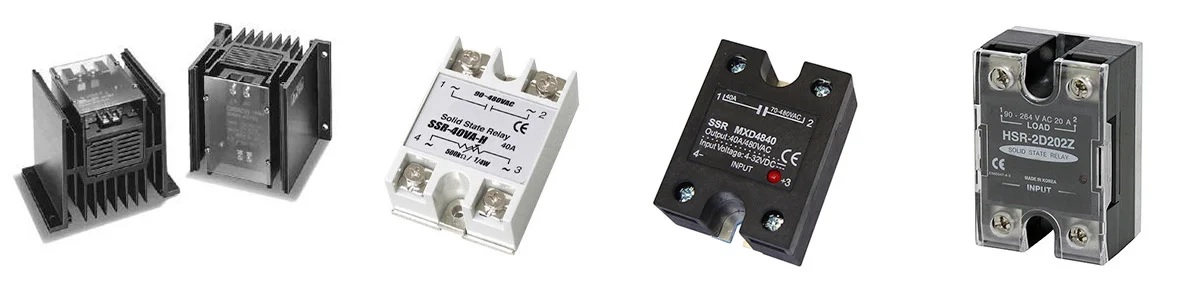
  • Solid-State Relays (SSR)
    • Use semiconductor components instead of moving parts.
    • Offer fast switching, long operational life, and vibration resistance.
    • Suitable for applications requiring precise control and minimal maintenance, such as temperature regulation systems.

  • Time-Delay Relays
    • Provide controlled switching after a preset delay.
    • Essential for sequential operations in industrial automation and process control.
    • Allow engineers to design timed operations without complex circuitry.
  • Overload and Protective Relays
    • Detect overcurrent, voltage fluctuations, or abnormal conditions.
    • Protect equipment from damage and prolong system life.
    • Key for safeguarding motors and sensitive electronic devices.

Factors to Consider When Comparing Relays

  • Load Capacity: Ensure the relay can handle the current and voltage demands of the system.
  • Switching Speed: Match relay response time to the required operational speed.
  • Durability and Lifespan: Consider the mechanical wear or thermal stress for reliable long-term performance.
  • Environmental Conditions: Evaluate temperature, humidity, and vibration tolerance for optimal operation.

By systematically comparing these factors, engineers can identify the relay type that best aligns with operational goals.

Benefits of Informed Relay Comparison

  • Optimized Automation Design: Selecting the correct relay type streamlines system performance.
  • Reduced Maintenance Needs: Appropriate relays lower the frequency of replacements and downtime.
  • Cost-Effective Solutions: Efficient relay choices prevent over-specification and minimize unnecessary expenses.
  • Enhanced Operational Safety: Using the right relay ensures compliance with safety standards and protects equipment.

Conclusion

Comparing types of relays is a crucial step in designing effective automation solutions. Understanding the capabilities and limitations of each relay type allows engineers to make informed choices that enhance reliability, efficiency, and safety. By investing time in careful relay comparison, automation systems achieve superior performance and long-term operational excellence.